“Tidy your toys” can describe anything from putting away three cars to reorganising an entire room. Children may stop because they cannot see what finished looks like. Giving the task an edge makes it easier to begin and easier for everyone to agree when it is done.
Choose a moment when you can help establish the routine. A tired child facing a roomful of mixed toys will usually need more than a reminder from the doorway.
Define one patch of floor
Start with the rug, the space beside the sofa or the route from the door to the bed. Say what needs to change: “The cars and track on this rug go back in their boxes so we can walk through.” Point to the actual boundary.
Move adult belongings yourself. If post, laundry and toys share the same pile, a child cannot finish their part without solving other people's storage problems. Keep the initial task limited to possessions with known homes.
For younger children, a single category may be enough. Ask for the large blocks while you gather other items. Older children can work through two categories in order rather than tackling a mixed heap at once.
Make destinations easy to recognise
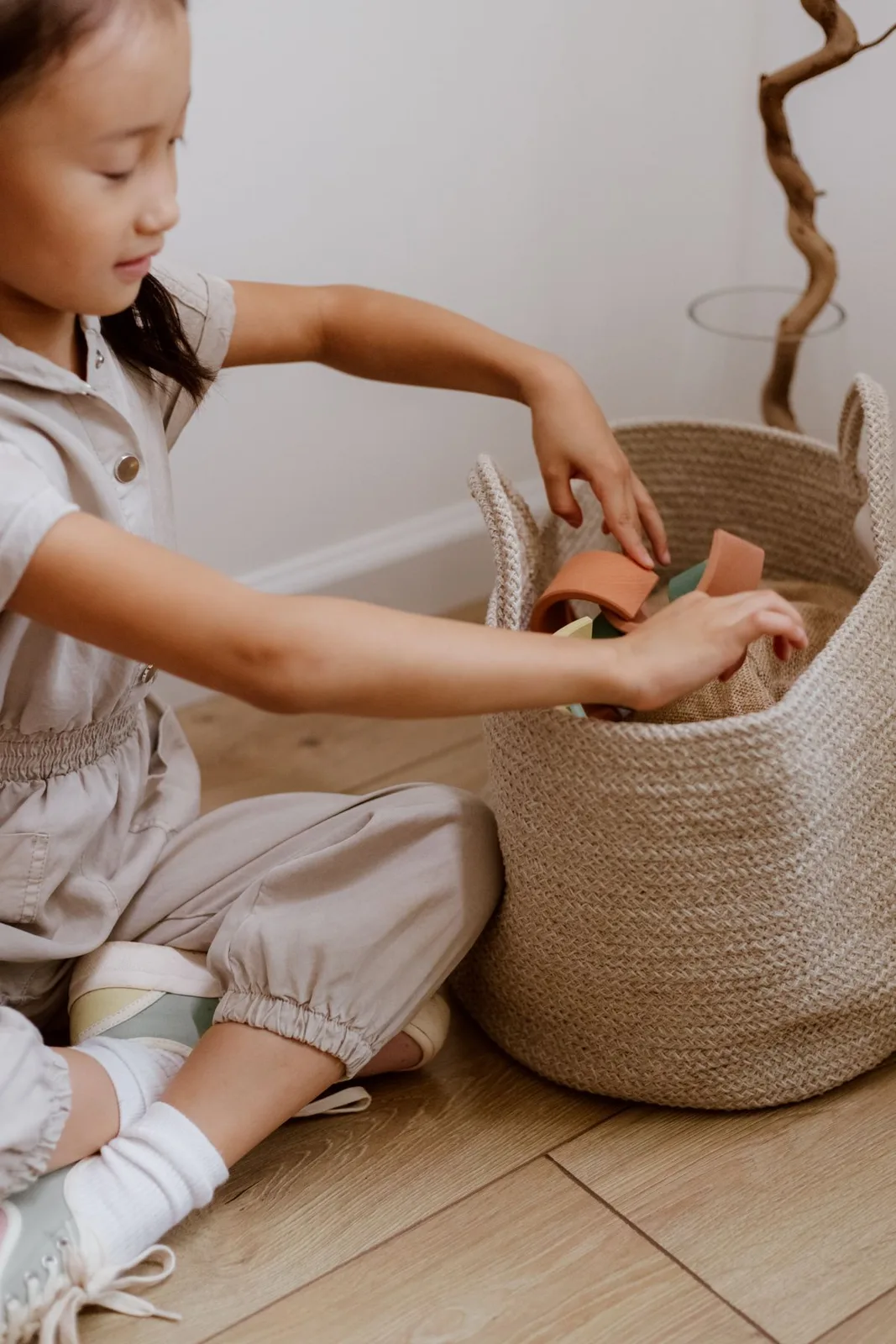
Put containers where the child can reach them and check that the toys fit without careful packing. A box that only closes when every piece is arranged perfectly is likely to create another barrier tomorrow.
Use a photograph or simple drawing on the front if labels are not useful yet. Keep broad groups such as vehicles or building pieces rather than making a separate compartment for every variation. Leave small or age-restricted pieces under suitable adult control.
If you cannot say where an item belongs, set it aside for an adult decision. Do not keep sending the child around the room looking for a home that does not exist.
Give unfinished play a different ending
A half-built zoo or carefully arranged shop need not always be dismantled. Agree on a small place where one project can remain, provided it does not block access or create a hazard. A tray may let you move a modest scene onto a suitable shelf.
Ask which part matters most. Sometimes keeping the central building is enough; the scattered packaging and spare figures can go away. If the space must be cleared, offer a photograph before dismantling, without presenting the photo as compulsory.
Put a time on the next review, such as before the table is needed tomorrow. “Keep it forever” is difficult to accommodate in a shared room.
Finish with a visible check
Walk to the boundary together and look at the floor. Are the agreed toys away? Is the route clear? If so, say that this task is finished. Avoid adding a cupboard sort at the last moment simply because the child has made progress.
Next time, use the same short description and help less where the child is ready. If tidying repeatedly stalls at one box, investigate the box or the amount of toys available. A clear endpoint is useful only when the task is small enough to reach it.
Make it work for your family. Keep the useful bits and change the rest.