A school bag usually gets lost in plain sight: under a coat, beside yesterday's shoes or on a dining chair that somebody needs. A useful bag station gives it one predictable destination. It does not need a new piece of furniture or a row of matching baskets.
Start with the route your child already takes through the door. A beautifully arranged corner elsewhere in the house will be less useful if getting there means stepping around the kitchen table with a full bag.
Test the location with the real bag
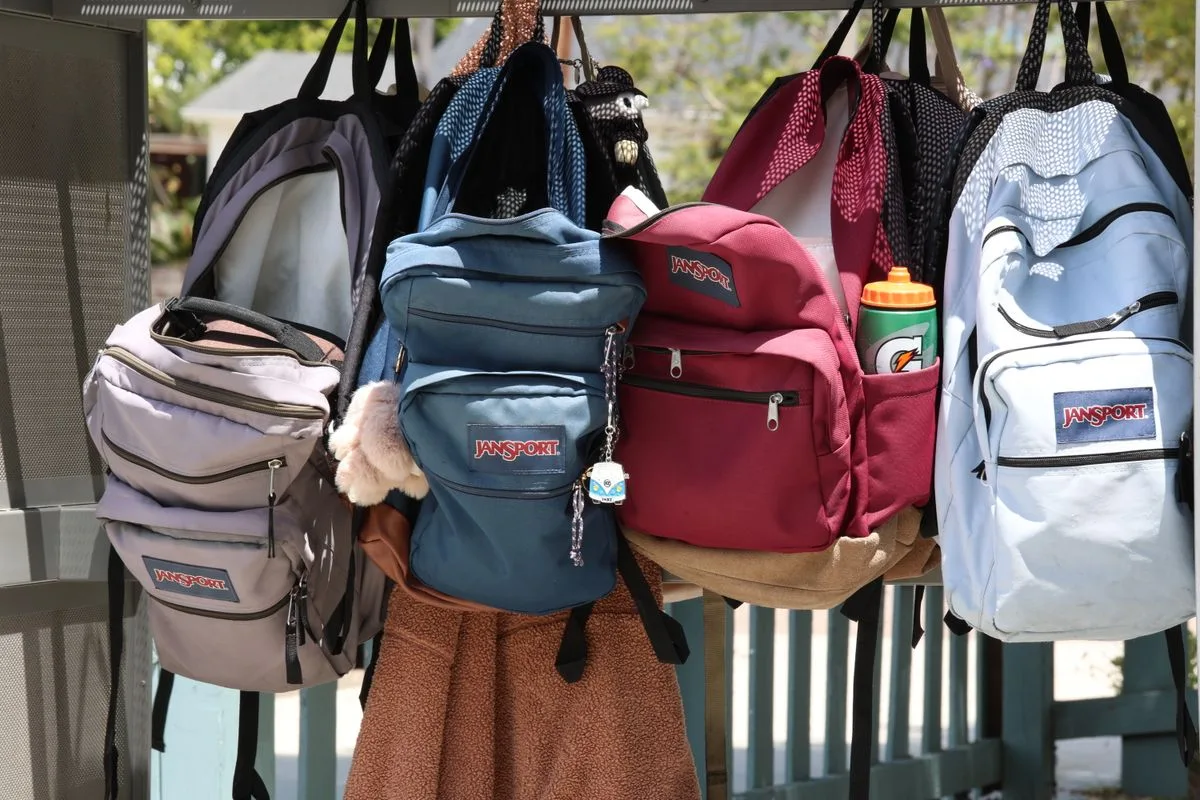
Ask your child to put the bag down where you are considering the station. Can they reach the hook or shelf without stretching? Can a full bag fit without blocking a door, radiator or walking route? If you use hooks, fit them securely for the wall and expected weight, following the hardware instructions.
A floor-level basket can be easier for some children than a hook. Keep it clear of exits and stairways. In a narrow hallway, a bag can live just inside another room; the important feature is a reliable place, not that it must be beside the front door.
Try the location for several school days before buying storage. A temporary box will tell you whether the space works.
Separate arriving from packing
Coming home and preparing for tomorrow are two different tasks. At arrival, the routine might be: bag in its place, lunch container to the kitchen, school papers into a tray. Keep those steps short enough to remember after a tiring day.
Later, when there is time to check the next day's needs, the bag can be packed again. Expecting a child to sort every item at the door can turn a useful landing spot into another demanding moment. Younger children will need an adult to work through the steps with them.
Give loose papers one destination
Use a single shallow tray, folder or large envelope for letters and forms. Label it with words and a simple picture if that helps. The tray is a place to capture papers, not a guarantee that somebody has read them.
Agree which adult checks it and when. If care is shared, add important dates to the household's agreed calendar after checking the actual letter. A photograph of a form can be helpful, but it does not replace returning a signed original when the school requests one.
Keep private school or health information out of view of visitors. A folder inside a cupboard may suit your household better than an open noticeboard.
Make tomorrow visible without adding clutter
Put a short checklist inside the station: bag, required book, water bottle and any day-specific item. Follow your school's own requirements rather than building a list of things that never travel. An older child can write their version; a younger child may find a few simple drawings easier to use.
Leave sports equipment or bulky items in their usual storage until needed. A small reminder card saying “PE kit on Tuesday” can work better than keeping every possible item in the hallway all week. Update it when the timetable changes.
Reset the system when it stops helping
After a week, ask what still ends up elsewhere. If the hook is empty but the bag is always beside it, the height or effort may be wrong. If letters collect in the bag, practise that one step together instead of adding more labels.
Clear the station at the end of term. Return borrowed items, remove old notices and decide what needs to stay for next term. The station should make school belongings easier to find; it should not become permanent storage for everything that once went to school.
Make it work for your family. Keep the useful bits and change the rest.