A toy swap works best as a small exchange between households who have agreed what to bring. It does not need to become a sale, a competitive event or a way to clear every unwanted object at once.
Start with a few toys children are genuinely ready to pass on. An adult's wish for cupboard space is different from a child's decision to give up a favourite.
Agree the shape of the swap first
Speak to the other adult about numbers, condition and the children's ages. Three complete toys each may be easier to manage than several overflowing bags.
Decide whether children choose freely from a shared selection or discuss individual exchanges. Explain that agreement to bring a toy does not guarantee receiving a particular item in return.
Keep money out of the arrangement unless both households deliberately choose otherwise. A simple swap does not require calculating retail prices or proving that every object has equal financial value.
Agree what happens to items nobody chooses. Returning them home is clearer than assuming the other household will dispose of them.
Check toys before offering them
Make sure items are clean, complete and in usable condition. Follow the original age guidance, and check for damage or missing parts that affect safe use.
Keep instructions with games and identify anything requiring adult assembly. Do not describe an incomplete set as ready to play simply because the missing piece seems unimportant to you.
Package related parts together. An adult should manage small pieces and packaging around younger children.
If a toy's condition is uncertain, leave it out. The swap should give another household an understandable item, not an unexpected repair task.
Let children make a considered choice
Give children time to select their outgoing toys before the meeting. Ask whether they are comfortable with somebody else keeping the item permanently.
For a younger child, offer one or two suitable possibilities and explain the idea concretely. An older child can check their chosen game or set and describe how it works.
Keep a clearly marked area for toys that are only being played with during the visit. Otherwise a familiar toy on the floor might accidentally become part of the swap.
Avoid pressuring a child to exchange because another child wants their item. If somebody changes their mind before the exchange is agreed, pause and clarify the decision.
Finish with a clear handover
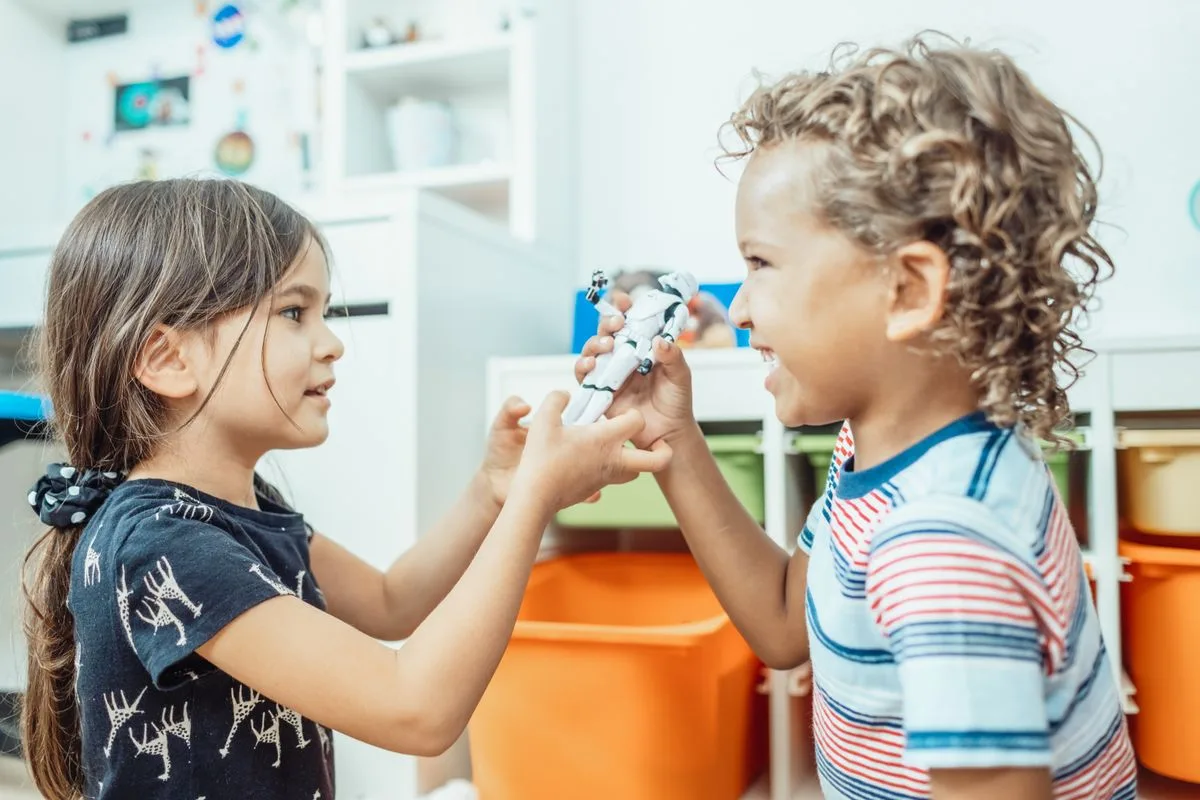
Allow children to look at the choices without rushing. Adults can help explain practical details and support younger children in taking turns.
Confirm the agreed exchange before toys leave the house. Each child should understand which items are going and which are coming home.
Check the incoming toys yourself and decide where they will live. One newly chosen game can replace the outgoing game's shelf space rather than creating a fresh storage problem.
Thank the other household and return unchosen items as agreed. A successful first swap can be small, with everybody leaving clear about their choices.
Make it work for your family. Keep the useful bits and change the rest.