Toy rotation can sound as though it needs a catalogue, matching boxes and a schedule. At home, it can be much smaller: put a few less-used toys aside and make the remaining ones easier to see.
Start with one play area. The aim is to give children a manageable choice, not to remove everything they love or make adults maintain a second toy collection in storage.
Notice what is actually getting used
Watch the ordinary play for a few days. Which things come out repeatedly? Which remain buried beneath other objects? A toy may be ignored because pieces are missing or the container is difficult to open.
Keep familiar favourites available. If a child relies on a particular toy for everyday play, there is no reason to rotate it simply to create variety.
Ask an older child what they would like easier access to. For younger children, use what you observe and introduce changes gradually rather than emptying the room while they are away.
Choose one small set to put aside
Pick a few complete items that are not currently central to play. Keep related pieces together so a returning toy is ready to use.
Check the manufacturer's age guidance and remove damaged items from the play selection. Store anything unsuitable for younger children beyond their access, rather than assuming a rotation box makes it safe.
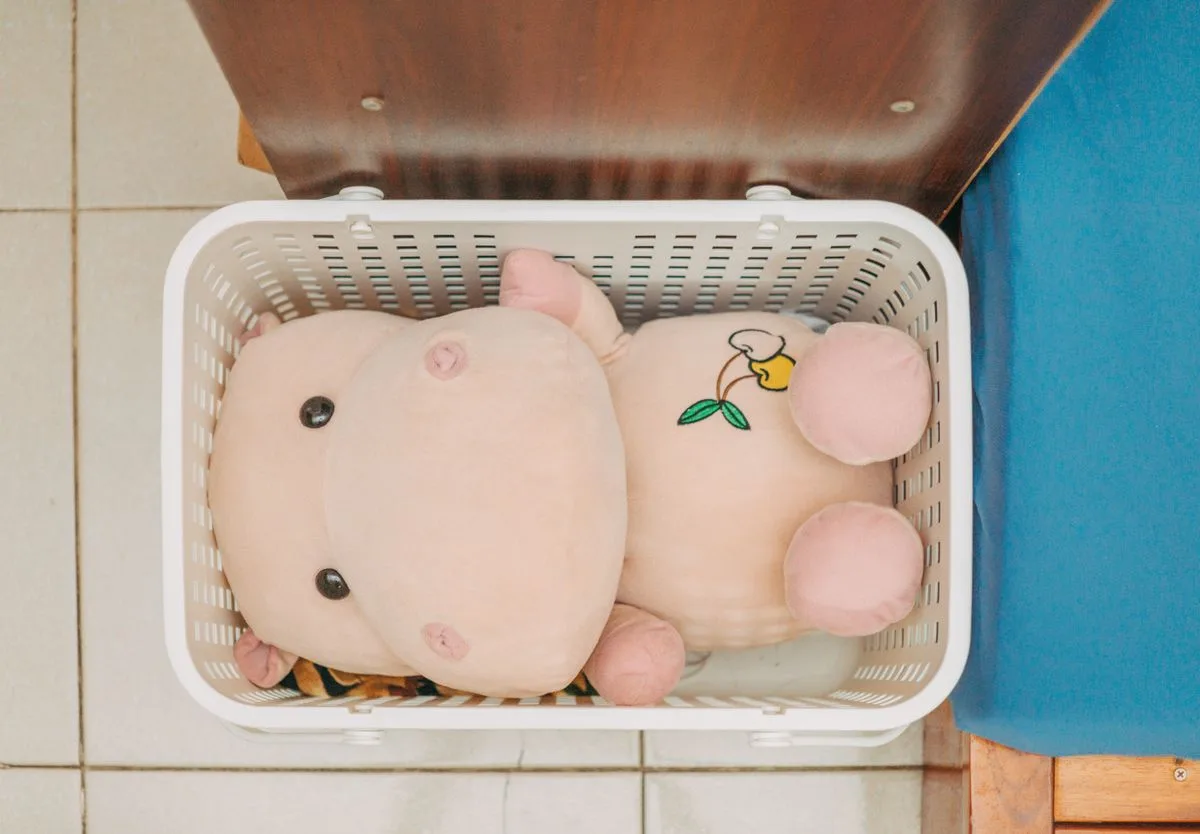
Use one container you already have. If the proposed set will not fit, reduce the selection instead of buying a row of new tubs.
Label the container with a plain description such as “Animal figures and small vehicles”. A photograph can help, but there is no need to document every piece.
Make the available toys easier to begin
Place the remaining toys where children can see and reach them. A few blocks in a shallow basket may invite more play than the same blocks under a pile of unrelated objects.
Keep enough pieces for the activity to work. Rotating half the track while leaving the trains out can make an otherwise useful toy frustrating.
Avoid arranging every toy into an adult-created scene. Leave room for children to decide what happens. One clear starting point, such as animals beside building blocks, is enough.
For siblings, check that each child still has something they can use comfortably. A smaller selection should not become a single contested object.
Swap when there is a reason
Return something when a child asks, when interests change or when an available set has had a long spell of use. A strict weekly timetable is unnecessary.
Invite an older child to choose one outgoing item before a stored set returns. For younger children, make one change and see whether it helps.
If the storage container is growing or toys are repeatedly forgotten, pause the system. Some items may need repairing, passing on or returning to ordinary storage instead.
Finish each swap by checking the play area's usable space. The useful result is a smaller, accessible choice and a box you can manage without turning toy rotation into another household project.
Make it work for your family. Keep the useful bits and change the rest.