On a shared bathroom shelf, a child's toothbrush can disappear behind jars that belong to nobody in particular. Sorting by everyday use makes the space easier to understand. The job is small: give each person a clear place for the items they actually use, then remove the things that do not belong there.
Do the initial sorting without children handling unfamiliar bottles. An accessible shelf should contain only items appropriate for them to reach.
Separate access from storage
Take medicines, cleaning products, sharp equipment and other adult-controlled items out of the proposed child-accessible area. Store them securely according to their labels and your household's safety needs. A pretty basket on a low shelf is not secure storage.
Check the shelf itself. It should be stable and reachable without climbing on the toilet, bath or furniture. Avoid placing the child's everyday items where using them requires leaning across water or a hot surface.
If no suitable shelf exists, an adult can bring down a small set of supplies when needed. Easy participation does not require unrestricted access to the entire bathroom cupboard.
Give each person a small identifiable space
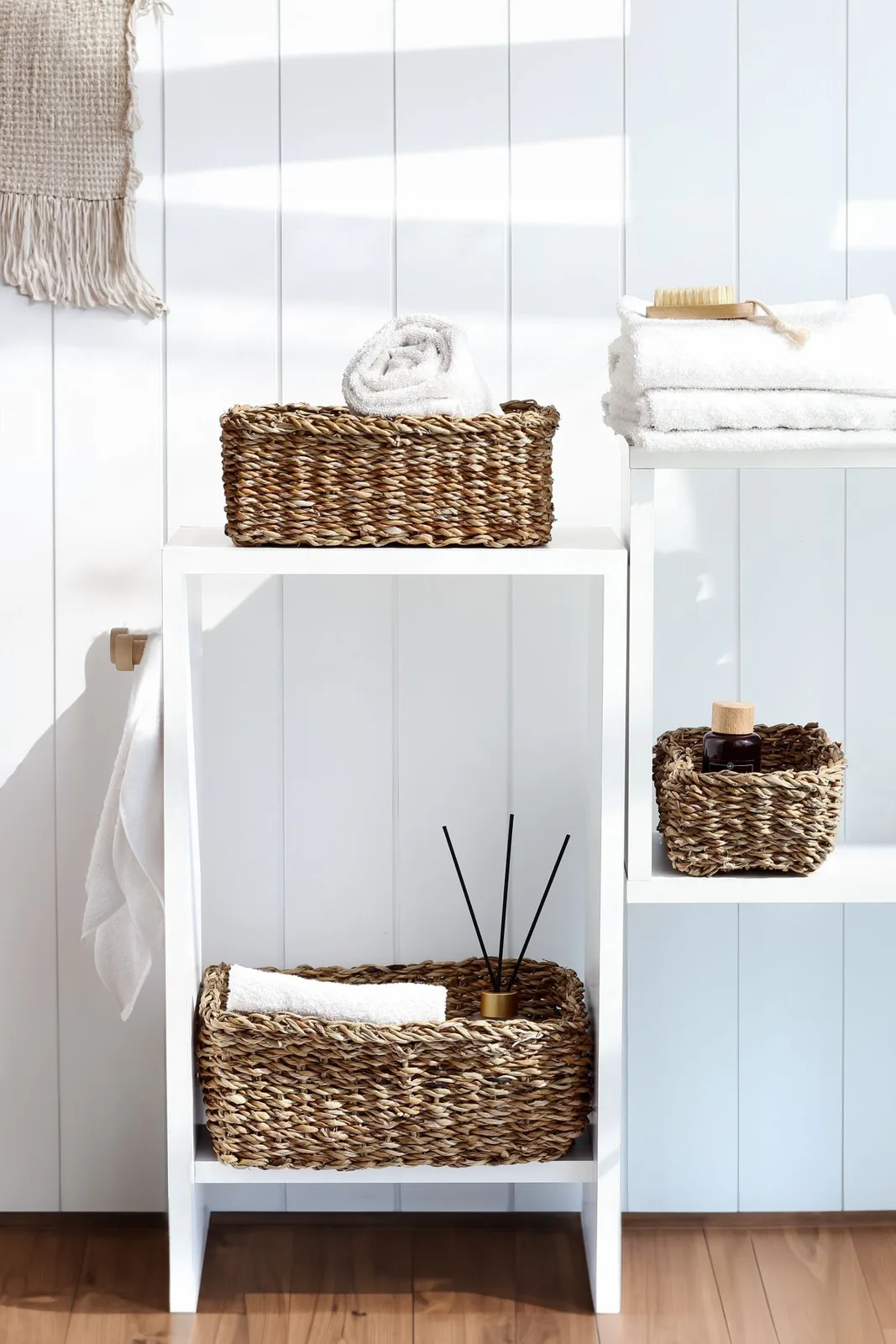
Use existing holders or washable containers that fit without crowding. A name label, colour or simple picture can help children distinguish their items. Do not depend on colour alone if it is not useful for everyone.
Keep toothbrush heads from touching and choose storage that allows them to dry. NHS oral-health guidance recommends rinsing toothbrushes and letting them air dry. Put products back according to their own instructions. Shared items can have a separate central position so children do not have to search through someone else's things.
Leave enough room to lift an item out without knocking three others into the sink. If the shelf is crowded, reduce what lives there rather than making children perform careful rearrangements every morning.
Walk through one real routine
Ask your child to show you how they get the items they use with adult help. Notice reaching, opening and returning, not just whether the shelf looks orderly. A lid that is difficult for small hands can make an otherwise useful container awkward.
For a younger child, offer one instruction: “Your brush goes back in the holder with the star.” Older children can help decide where a personal comb or hair tie belongs. Keep adult supervision and support appropriate to the activity; a labelled shelf does not change what a child can manage safely.
If two children use the bathroom at once, agree where each stands. Sometimes taking turns is more practical than adding another holder to an already narrow sink.
Keep the reset brief
During normal bathroom cleaning, remove empty containers and wipe the storage according to the materials' instructions. Return items that have drifted to the wrong place. Check whether labels are still readable after splashes.
Ask what remains hard to find. If the same comb is always left elsewhere, its home may be inconvenient. Move that one item and try again. The shelf is doing its job when familiar things can be found and returned without turning the morning into a search.
Make it work for your family. Keep the useful bits and change the rest.