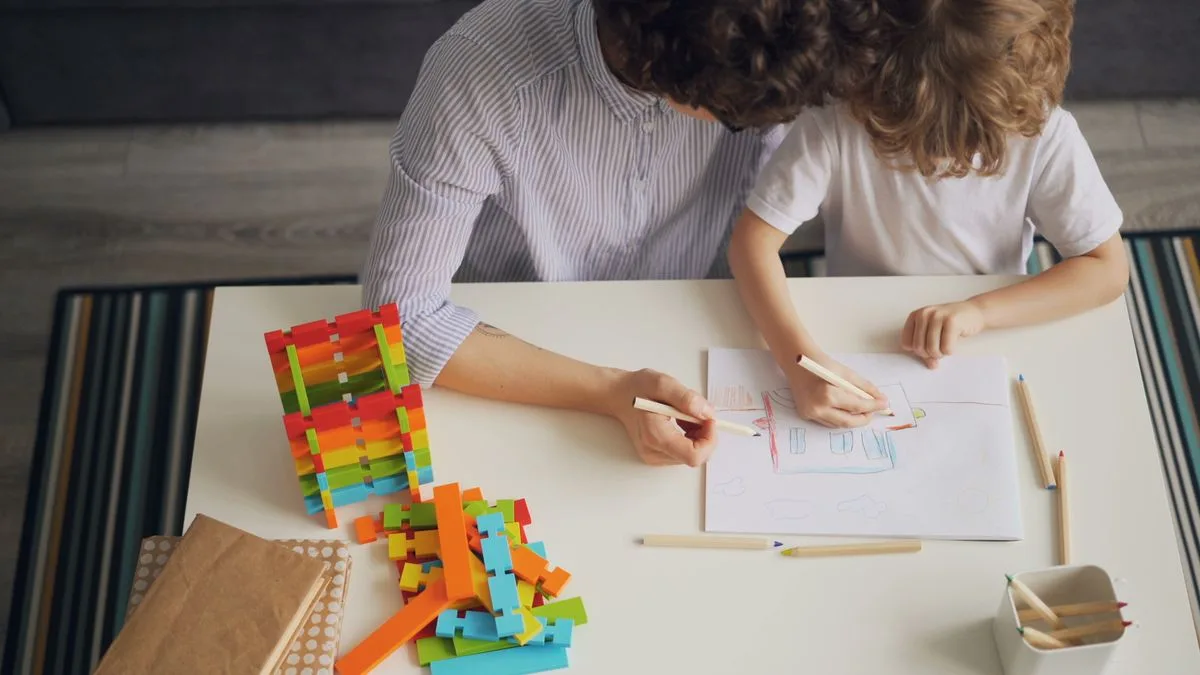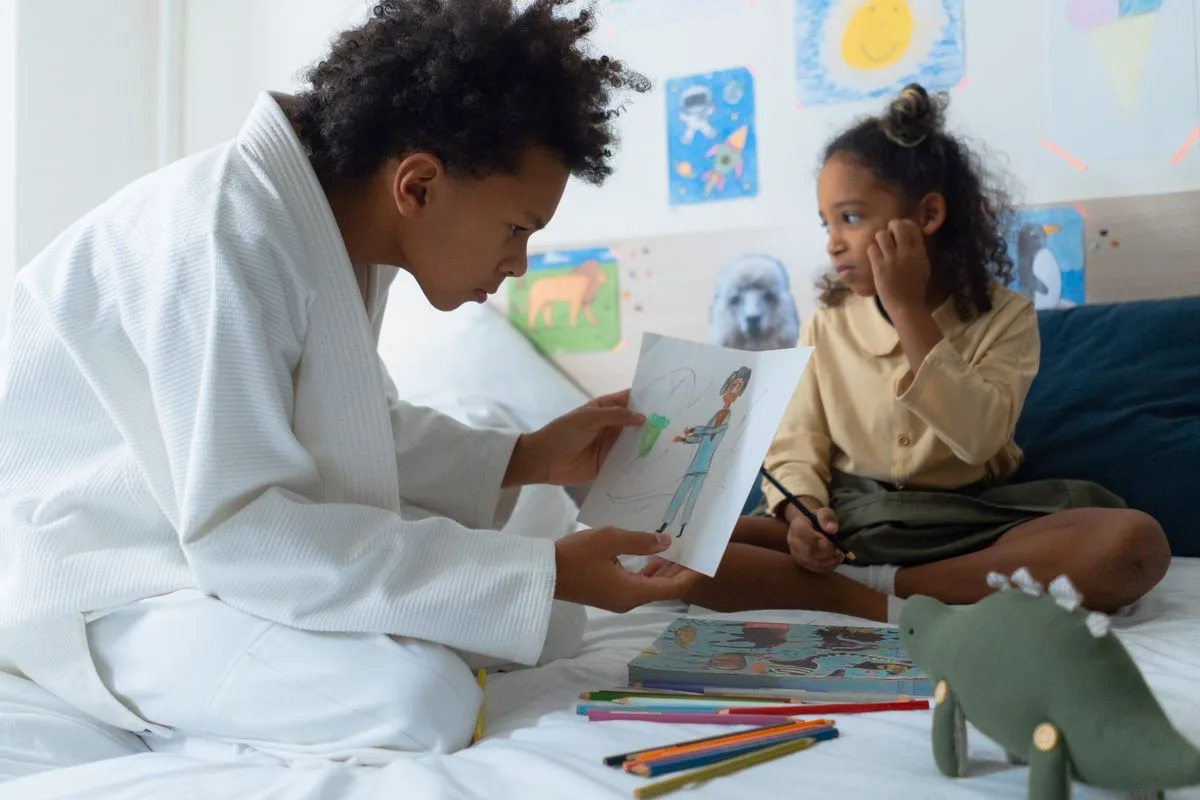
Sharing a drawing can be difficult when one child has a precise plan and another wants to cover the paper with colour. A game with clear boundaries offers a way to collaborate without asking either child to surrender every idea. Start on ordinary paper rather than using a treasured unfinished picture.
Set out a few familiar crayons or pencils. Give each child enough working space and let them choose whether they want to join.
Decide what may be changed
Before the first mark, agree that nobody erases, scribbles over or redraws another person's contribution without permission. A shared picture does not mean every part is available for alteration. Use a fresh sheet if the children want incompatible projects.
Draw a loose frame around a large page and divide it into two neighbouring spaces. Each child starts in their own area. Leave a strip between them where a shared path, river or story connection can appear later.
With a younger child, an adult can describe the boundary simply: “These marks belong here; your sibling is drawing on that side.” If the arrangement is too difficult today, use two sheets placed alongside each other. Collaboration can happen through connected stories rather than one physical page.
Take turns adding a useful detail
Choose a broad setting, such as a place where animals live or a street with unusual houses. Each person makes one addition, then pauses while the other decides what to add. A turn can be a single shape or a few related marks; avoid timing every second.
Children can explain their contribution if they want to. “This is a pond” helps the next person connect an idea, but detailed narration is not compulsory. A non-speaking child can point to where the next feature might go or choose a colour.
Keep adult suggestions modest. Ask whether the two areas need a bridge or a shared visitor, then let the children decide. If one child directs every turn, remind them that suggestions can be declined. The other child still owns their choices.
Try passing the paper only if both children are happy with that movement. It is often easier to keep the sheet still and take turns reaching their own space.
Make disagreement part of the practical plan
When two ideas conflict, offer a concrete option: add a second version, make the feature removable on another scrap of paper, or leave the disputed area blank. Do not demand agreement about every colour to prove the activity has worked.
A child can stop before the other is finished. Give notice before ending the session, then ask whether any shared area needs one final mark. Take a photograph or make a copy if both want a version to keep.
Decide together where the original will live. A folder labelled with both names may suit the household better than assigning it to one bedroom. Clear the colours and spare paper, leaving the shared drawing with a destination that respects both contributors.
Make it work for your family. Keep the useful bits and change the rest.