A cardboard town can spread across a whole room before anyone has thought about dinner. Give it a small footprint and a way to come apart, and it becomes a project children can revisit. The first afternoon only needs one road and two buildings. More complicated places can arrive when a story needs them.
Choose boxes that can stand alone
Look for clean, dry cereal cartons, small delivery boxes and pieces of plain card. Remove staples, loose tape and packaging inserts. Keep plastic bags out of the play area. An adult can open awkward seams and cut doors before younger children join in; there is no need for a cutting knife at the children's table.
Pick a base that fits somewhere you can actually leave it, such as two pieces of card on a shelf. If the town must disappear at mealtimes, skip the base entirely and use separate road strips. Buildings that move independently are much easier to store than an enormous glued landscape.
Draw the street before decorating
Lay out a main road with enough space for the toys that will use it. Try driving a toy vehicle around the corners before making permanent marks. A wide bend may work better than the impressive junction an adult imagined.
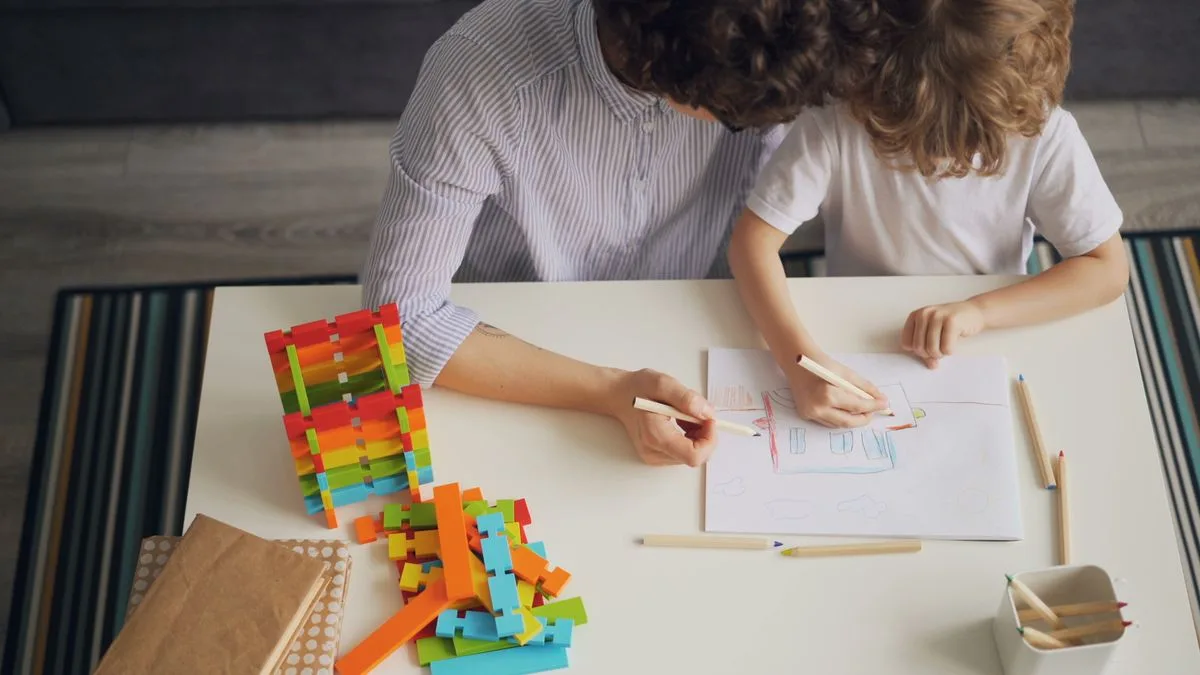
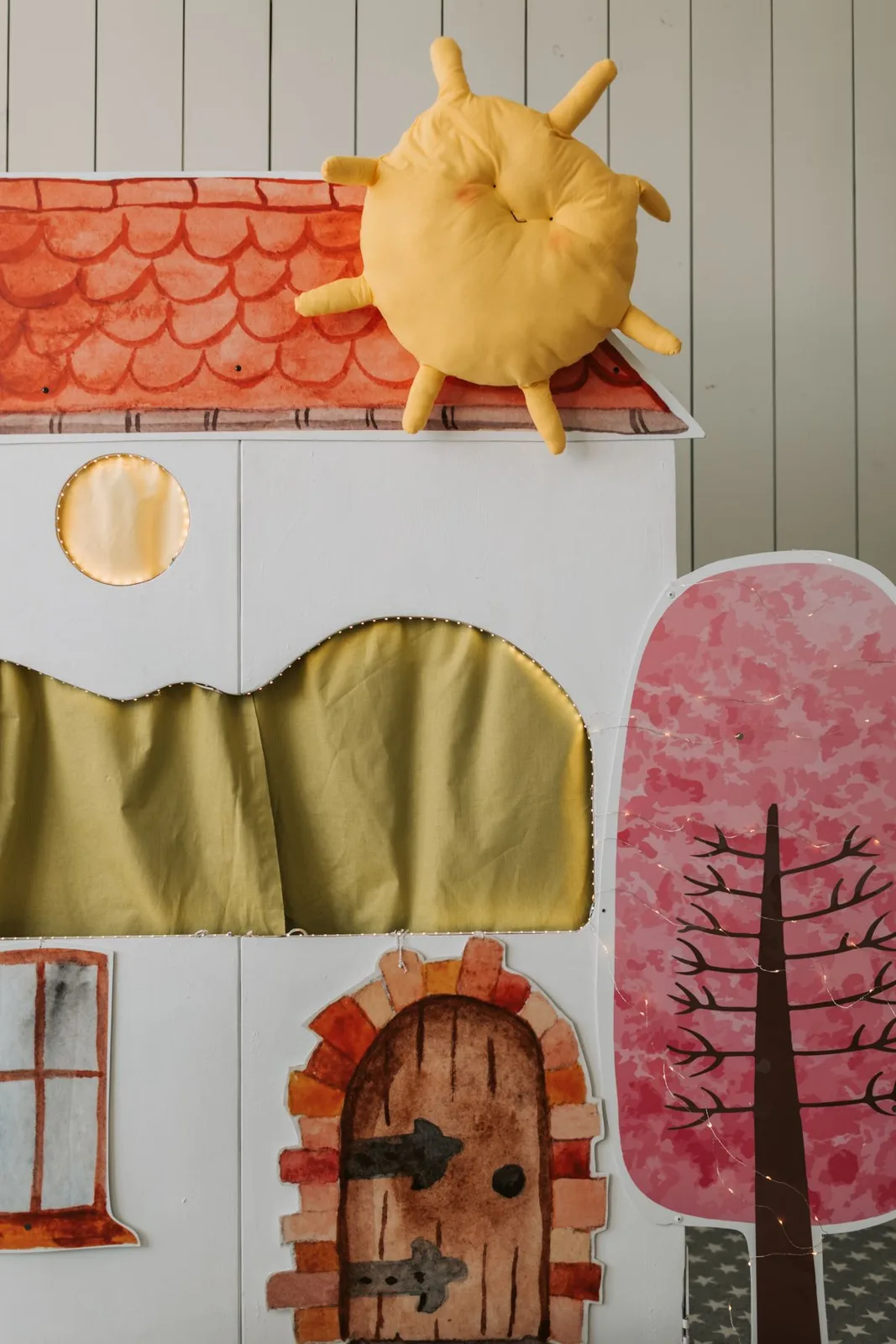
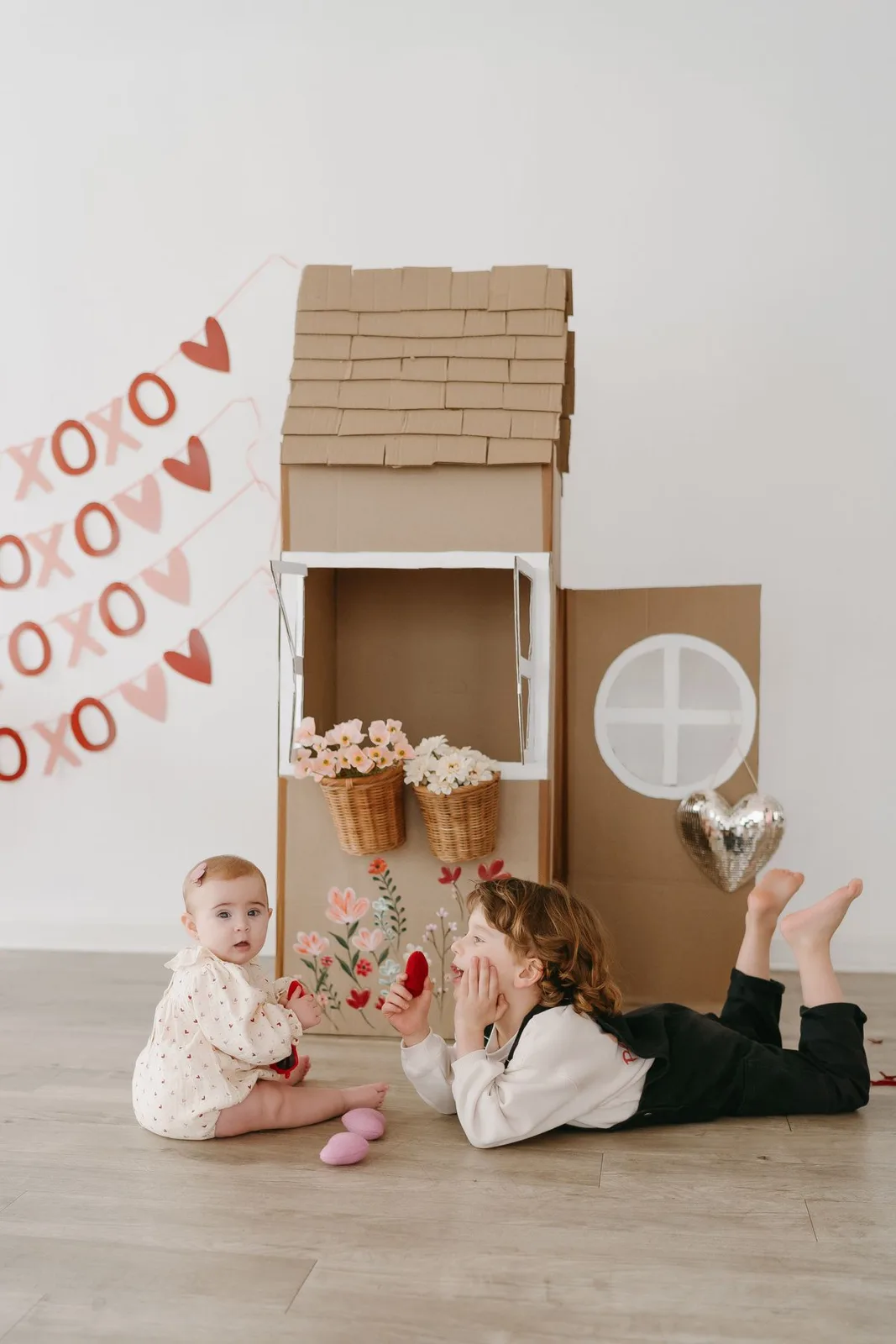
Invite each child to choose one useful building. A home and a shop create plenty of stories without needing a whole high street. Draw windows with pens or glue large paper shapes onto the boxes. A folded roof can rest on top instead of being fixed, which makes repairs straightforward.
Write names only if children want them. A younger child can choose the colour of the bakery while an older child makes its opening sign. Neither needs to copy a finished example.
Let the stories decide what comes next
Play with the first buildings before adding more. Where will the bus stop? Does the delivery driver need somewhere to unload? These questions give new pieces a purpose. A scrap of blue paper can become a pond, while a folded strip becomes a bench.
Keep a blank space at one edge as the future building plot. When children disagree about what belongs there, make movable alternatives rather than forcing one permanent decision. The park can appear in the morning and the station later.
Make room for different kinds of play
For a child who prefers arranging to pretending, offer the job of checking whether doors face the road. Another might narrate a missing parcel adventure. The same town can support both kinds of play.
Store it like a collection
Photograph the layout if children want to rebuild it accurately. Nest smaller buildings inside larger boxes and keep roads together in an envelope. Put unfinished pieces in a separate container so the entire collection does not become a pile of scraps.
Before the next session, ask which part children want to keep. Retire flattened buildings and reuse their clean card where possible. A town that grows gradually stays playable because its inhabitants, roads and storage all have room to change.
Make it work for your family. Keep the useful bits and change the rest.