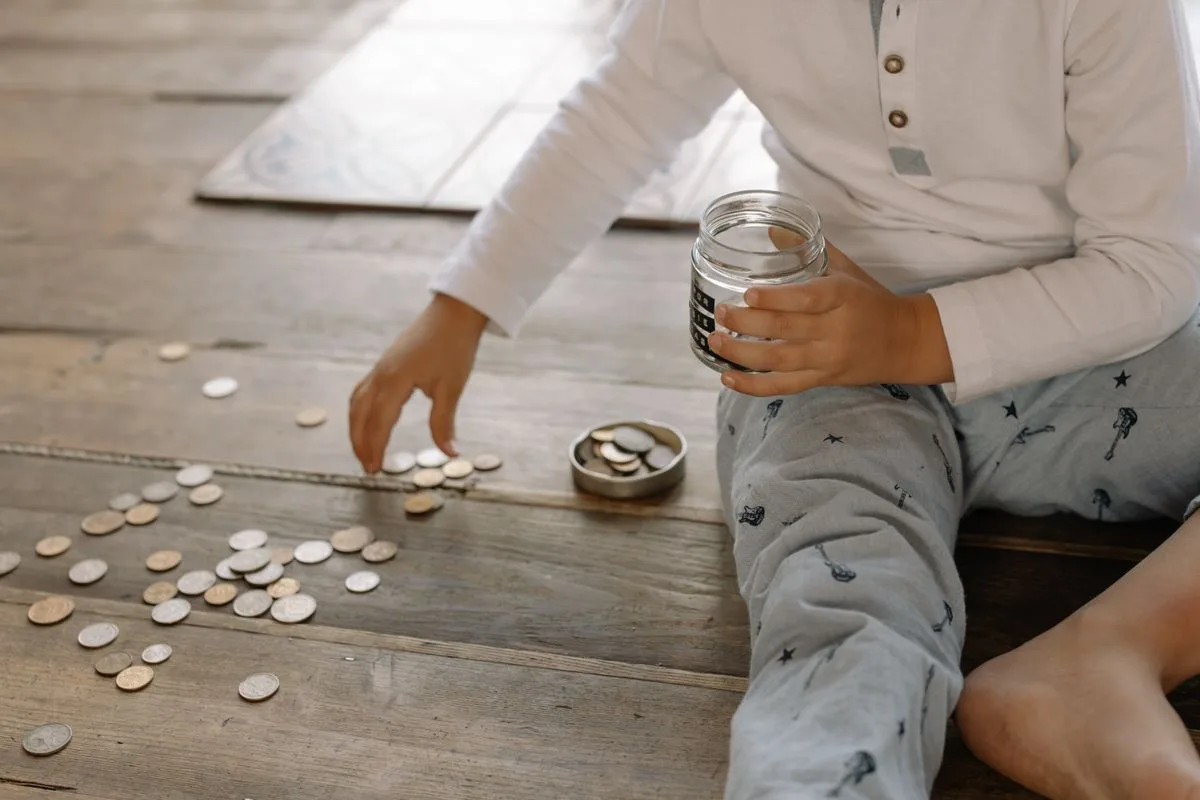
A child can remember receiving pocket money without remembering the small purchases that followed. A record makes that sequence visible. It need not involve an app, a bank account or complicated categories: a page showing what came in, what went out and what remains is enough to begin.
This is a practical way to track an arrangement your household has already chosen. The amount, frequency and purpose of pocket money are decisions for the adults responsible for it.
Agree what the record includes
Choose one clearly defined pot of money. For example, track weekly pocket money and birthday cash only when the child decides to add it. Keep school lunch payments and adult household spending elsewhere so the page remains understandable.
Explain whether the money is held as cash, by an adult, or in another agreed place. A written balance is a record of money actually held; writing a number does not create extra money. If different carers give money, agree who updates the record so the same gift is not added twice.
Make an opening entry together. Count the available money or confirm the amount held, write the date and label it “Starting amount”.
Use three columns children can follow
On a notebook page, draw columns for “What happened”, “Money in or out” and “Money left”. Add a date alongside each entry. An adult can do the arithmetic while a younger child describes the event.
A first example might read: “Saturday pocket money, plus £2, £7 left.” A later entry could be: “Notebook, minus £1, £6 left.” These are examples, not suggested amounts. Use the sums and currency that match your own arrangement.
For a child who finds numerals difficult, draw a few large coin shapes alongside the real total. Keep the written balance as the accurate record rather than relying on pictures alone.
Make purchases part of the routine
Check the balance before buying. Ask the child to say what the item costs and what would remain afterwards, helping with subtraction as needed. If the price is uncertain, find out before making the entry.
Write the purchase down soon afterwards, using the receipt if there is one. A receipt pocket at the back of the notebook can help when you are away from home. Do not expect a child to reconstruct a month of purchases from memory.
If plans change and money is returned, record the refund as a separate entry. This shows what happened without erasing the original decision.
Keep goals visible and flexible
A child saving for a particular item can put its name and checked price on a separate page. Leave the main record focused on actual money. Wanting something does not mean the child must commit every future payment to it.
Check the balance together
Once a week, compare the record with the money held. If they differ, calmly work back through the latest entries. Correct the page together and note the reason when known. The useful habit is checking and repairing the record, not producing a perfect-looking notebook or judging every small purchase.
Make it work for your family. Keep the useful bits and change the rest.