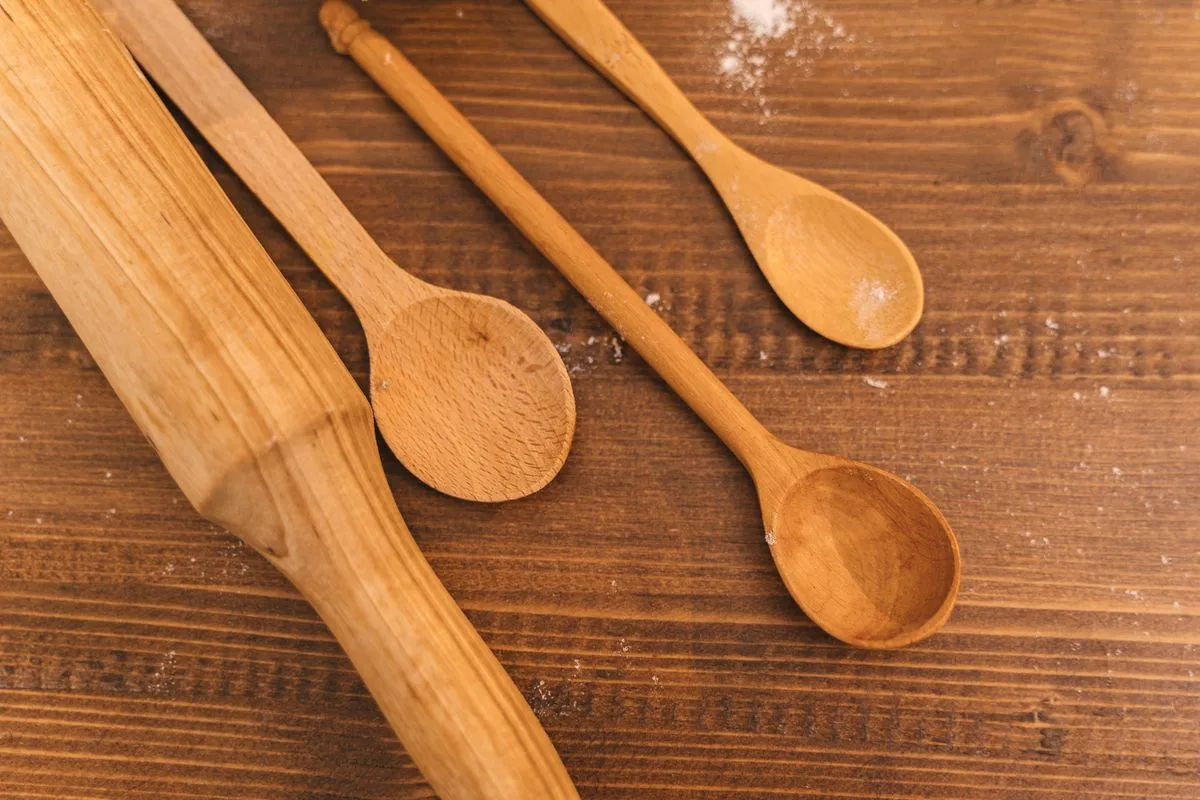
A kitchen band needs a few different sounds, not every saucepan in the house. Choose objects together, then move the activity away from cooking and eating. A wooden spoon on an upturned plastic tub, hands on a cardboard box and a soft brush across corrugated card can create quite different parts.
Start at a comfortable volume. The point is hearing what changes, which becomes difficult when everybody plays as loudly as possible.
Audition three objects
An adult should select clean, sturdy items without sharp edges or loose components. Leave glass, heavy pans, electrical appliances and valuable utensils out of the band. Avoid improvised shakers filled with small loose objects when younger children are present; tapping and scraping provide plenty to explore.
Try one object at a time on a protected surface. Does a spoon make a different sound against the side of a tub than on its base? Can fingers produce a softer version? Let children choose from the approved selection before adding anything else.
Keep striking tools light and use them only on the instruments. If the chosen surface slides, place a non-slip mat beneath it or switch to a cardboard box held steady on the floor.
Find a rhythm everyone can share
Begin with a short pattern: tap, tap, pause. Say it aloud as you play, then invite the children to join. The pause is part of the pattern, so give it as much attention as the taps.
One child can keep a slow, steady beat while another adds a sound every few beats. Younger children may join when they feel ready rather than matching immediately. An older child can invent a second pattern once the first feels familiar.
If the room becomes overwhelming, reduce the band to hands and one box. A child who finds loud sound uncomfortable can choose a quiet scraping part, sit farther away or listen from another room. There is no requirement to tolerate the whole ensemble.
Choose three visible signals together: open hands to start, a flat hand to soften the sound and hands closed to stop. Practise these without instruments first. Then let each interested child conduct a brief piece.
Avoid complicated signals for speed, solos and volume all at once. A leader who only needs to start and stop can still shape the music. Ask players to watch the conductor rather than treating a missed cue as losing the game.
Make space for a quiet section. Fingers brushing cardboard or palms patting knees can be surprisingly satisfying after a louder passage.
End with a final tune and return
Choose a familiar song or repeat the favourite rhythm for a last performance. Agree the ending before beginning, such as three slow taps together. That is easier to stop than an open-ended instruction to finish soon.
Return usable kitchen objects to their proper places after checking and cleaning them. Keep one sturdy tub with the craft supplies only if it has a future job. A small band that can be put away quickly is much easier to invite back.
Make it work for your family. Keep the useful bits and change the rest.