Some children arrive home ready to describe every lesson. Others want food, silence or somewhere to move before answering a question. A gentler landing means leaving a little space between the school day and the next set of demands.
Look at what has to happen immediately and what can wait. The arrival routine should fit the actual afternoon, including clubs, siblings and adults who may still be working.
Keep the first few minutes understandable
Choose a short sequence for coming through the door: belongings in their usual place, shoes where they belong and access to a drink or planned snack. Work alongside younger children rather than issuing several instructions from another room.
Avoid adding a discussion about homework, a lost item and tomorrow's event all at once. Essential information can still be handled, but the child does not need a full debrief while taking off their coat.
If there is an immediate appointment, explain the short plan plainly. “We have a few minutes here, then we leave for swimming” is more useful than offering unlimited rest and suddenly ending it.
Offer two ways to settle
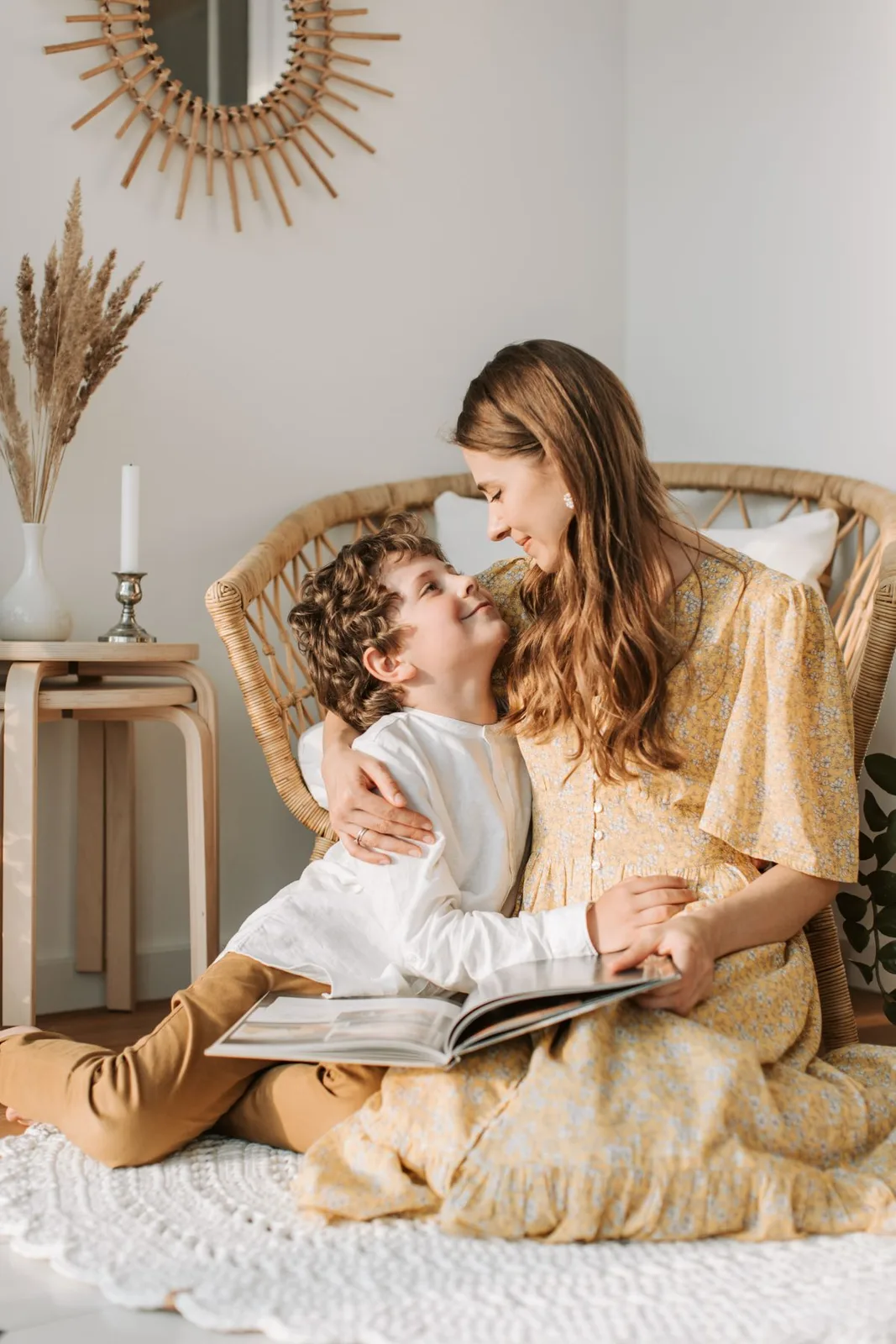
Make a quiet option and a movement option available without turning either into a prescribed treatment. Quiet might mean browsing a book beside you, drawing or sitting in a familiar corner. Movement might mean a short garden game or walking together to the next destination.
Ask a concrete question: “Would you like to sit here or have a few minutes outside with me?” A child can choose neither and suggest something manageable. The options should reflect what the supervising adult can actually support.
Give siblings different landing places
For siblings, a shared landing does not require the same activity. One may want conversation while another needs space. Keep noisier play away from the person trying to settle, and avoid asking one child to entertain the other immediately after school.
Let conversation arrive gradually
A specific, low-pressure remark often works better than a list of questions. You might mention something you noticed on the walk or say you are available to hear about the day. A child who says “nothing happened” may simply not want to talk yet.
When they do share, listen before asking for missing details. Do not use another child's account to challenge their version of an ordinary event. If something needs follow-up with school, make a separate note and use the school's normal contact route.
Adults also need a workable transition. Put essential bags or papers down, check immediate arrangements and give yourself a moment to switch attention where possible. A calmer arrival cannot rely on one person doing everything simultaneously.
Connect the pause to what comes next
Give notice before the next fixed task: homework, a meal or leaving for a club. Use a concrete marker such as finishing the current page rather than an abrupt instruction from the doorway.
After several afternoons, notice what helps and what creates friction. Keep the useful elements and simplify the rest. The aim is an arrival that feels predictable enough to use on an ordinary school day.
Make it work for your family. Keep the useful bits and change the rest.