A family recipe folder can bring familiar meals out of scattered screenshots and scribbled notes. Start with a handful of dishes you actually make, rather than collecting everything that looks appealing.
The folder should help somebody cook the food. Attractive photographs are optional; clear ingredients, an understandable method and a page that can be found again matter more.
Choose a small first collection
Pick a few recipes with different uses: a regular meal, a simple snack or something you make for a family occasion. Keep the selection within a thin folder you already own.
Use the complete instructions from a source you can return to. If you adapt a recipe, record the changes accurately rather than relying on memory the next time.
Include quantities, equipment and the order of steps. “Cook until ready” may make sense to an experienced adult, but another person could need the original recipe's clearer guidance.
Do not turn a personal folder into a public collection of copied recipes without checking the source's terms. For everyday home use, preserving a source reference also makes missing details easier to verify.
Make each page easy to follow
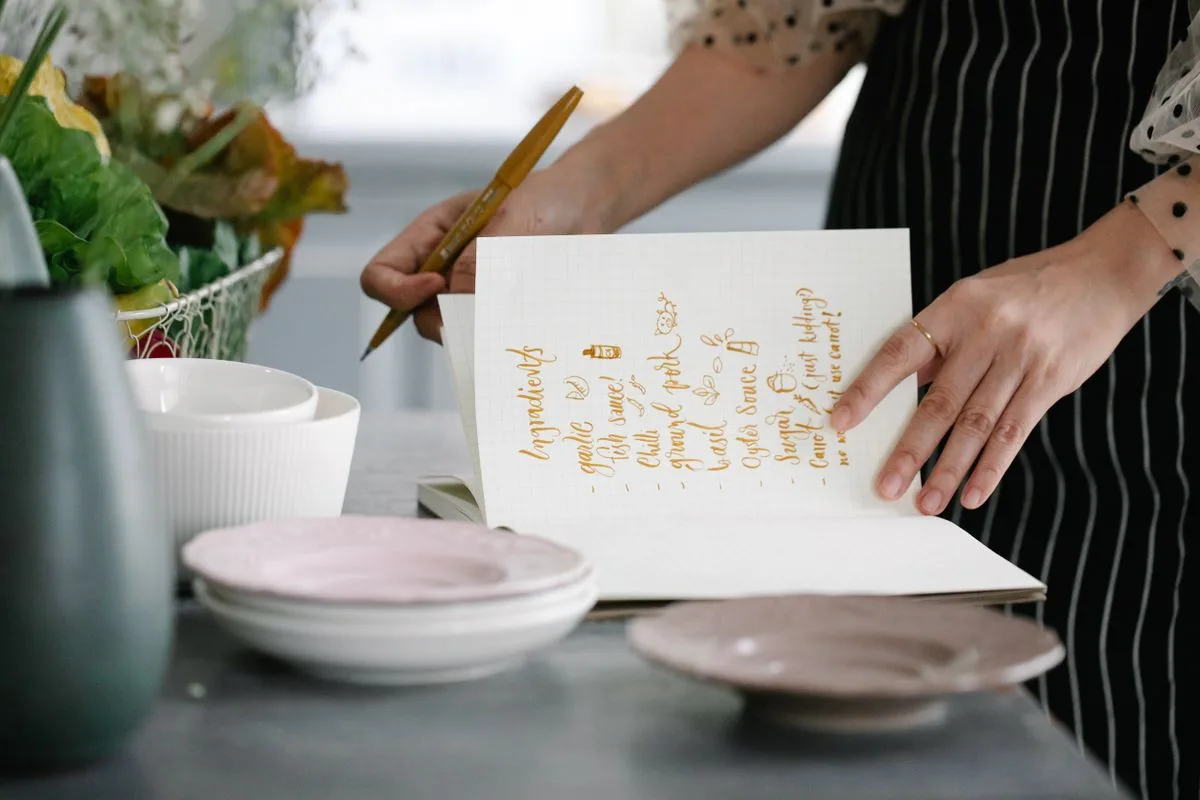
Give each recipe a clear name and put ingredients together near the beginning. Keep the method in the order it is used.
Write household notes separately from the instructions: the pan you normally use, where an ingredient is stored or a practical serving suggestion. Distinguish these notes so somebody can see what belongs to the original method.
Use a format readable at the kitchen counter. Loose tiny scraps can be attached securely to a full page rather than tucked between sheets.
Protect the folder from spills and heat, and keep it away from raw ingredients. A washable stand or a clear area beside the working surface may be useful if you already have one.
Give children roles from the actual method
Look through the recipe before starting and choose suitable jobs. A young child might wash produce with help or put paper cases in a tray. An older child can read an ingredient list or measure with supervision.
Adults should manage hot surfaces, sharp tools and any step beyond the child's current ability. Follow the recipe and relevant product instructions rather than simplifying away an important step.
Let children help choose a recipe from two feasible options. Check ingredients and available time first so their choice can genuinely happen.
Keep the folder current
After cooking, note one useful detail while it is fresh. If a written instruction caused confusion, clarify it before the next use.
Remove duplicates and recipes nobody wants to make again. Keep a separate short list of things to try, rather than filling the working folder with untested possibilities.
An older child can add a drawing or a short comment about the dish. Keep the practical instructions easy to see.
Return the folder to its usual place once the kitchen is clear. It is ready when another adult or child can find a familiar dish and understand their next useful step.
Make it work for your family. Keep the useful bits and change the rest.