A family jigsaw is easier to return to when it does not depend on keeping the dining table unavailable. Before opening the box, work out where the puzzle can rest between sessions.
Choose a puzzle suited to the children and the space. A large piece count is not automatically a better family project; an achievable picture gives more people a useful way to join.
Give the puzzle a movable, stable base
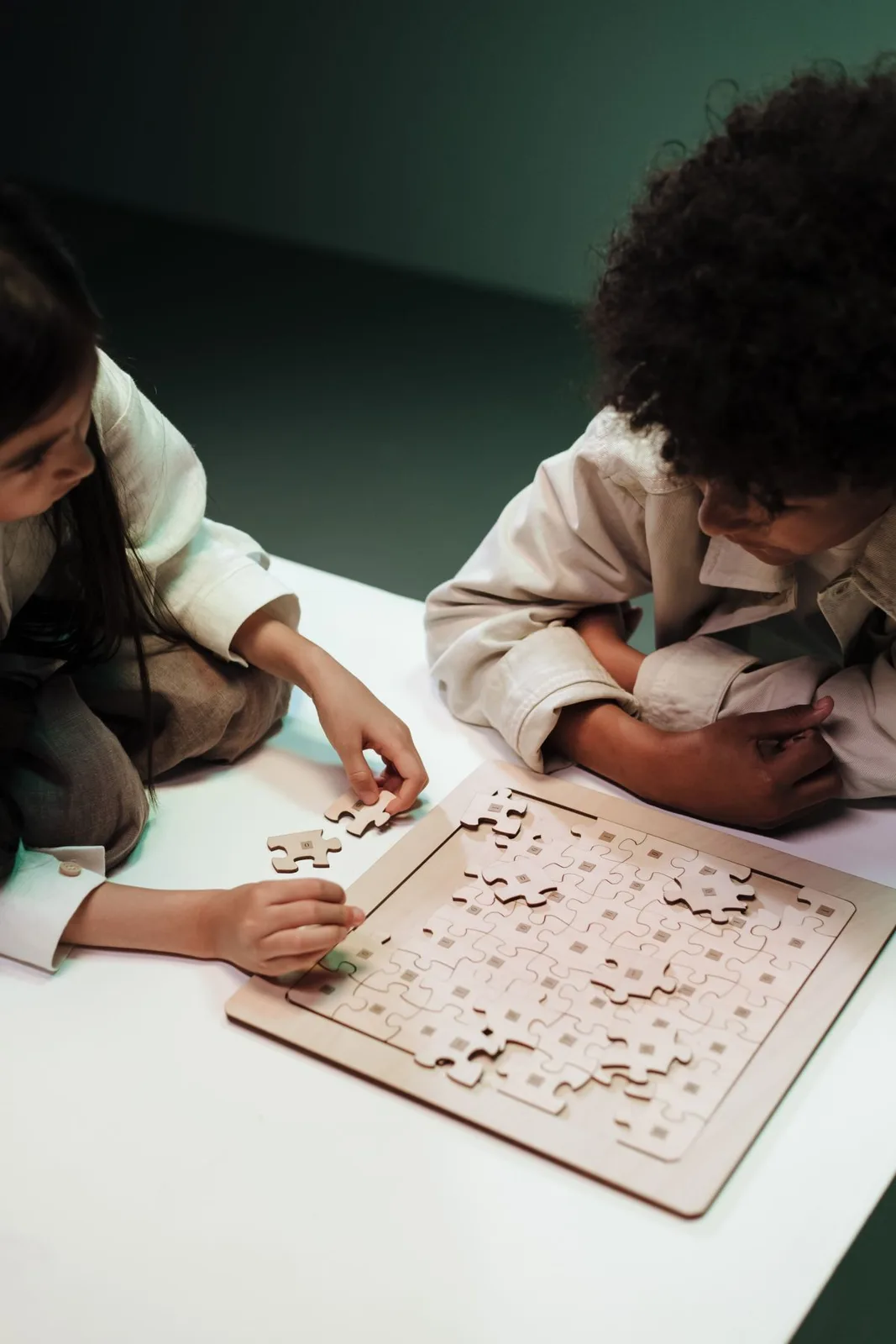
Check the finished dimensions on the box. Choose a flat base that is large enough for the complete picture, with some working room around the edges.
An existing rigid board or suitable tray can work if it remains flat when moved. Test the empty base and its resting place before putting pieces on it. Adults should manage heavy or awkward boards.
Make sure the stored puzzle will not block a doorway, balance precariously or sit where somebody needs to climb to reach it. A flat space you can actually use matters more than an elaborate puzzle accessory.
If no suitable base or resting place exists, choose a smaller puzzle that can be completed in one sitting. That is a workable adjustment, not a failed attempt at a bigger activity.
Share the work without assigning every piece
Turn pieces picture-side up and keep them within the available area. Shallow containers can hold sections or colours without spreading the puzzle across every surface.
Invite children to find something visible in the image: a vehicle, a patch of sky or a particular animal. Younger children may prefer a small identifiable part, while older children can work on a more detailed section.
Avoid insisting everyone start with the border if another approach helps them participate. The box picture can remain available as a reference.
Help with a specific obstacle rather than taking over. You might hold two joined pieces steady or suggest comparing a shape. Let the child decide where to try the next piece.
Keep drinks and food away from the working area. If younger children are nearby, manage access to small pieces according to the puzzle's guidance.
Stop at a point that makes returning easy
Give a brief warning when the table is needed. Gather loose pieces into their containers, keep the box picture with the base and check the surrounding floor.
Move the puzzle carefully, using adult help where needed. Do not promise a board will preserve the work unless it stays stable when lifted.
Before the next session, set the base down securely and reopen only the pieces you need. A child can begin where they left off without repeating the whole set-up.
When the puzzle is finished, allow time to enjoy the picture. Ask whether the family wants to keep it out briefly or take it apart now.
Return every piece and the reference picture to the box. The puzzle is ready for another occasion when starting, pausing and finishing each have a practical place in the room.
Make it work for your family. Keep the useful bits and change the rest.