The school-to-home handover has two different parts: getting essential information between adults and helping a child move into the next part of the day. Trying to do both in a busy doorway can leave everybody rushed.
Keep the process brief and follow the school's arrangements for collection and communication. A predictable plan is more useful than a detailed conversation while other families are waiting to leave.
Identify what needs attention now
At collection, listen for information that affects the immediate afternoon, such as a changed arrangement or an item the child needs to take home. If staff need to discuss something more substantial, ask how to arrange an appropriate conversation through the school's normal route.
Avoid trying to resolve a sensitive issue in front of other families. Keep personal details private and do not ask the child to repeat a difficult account publicly. You can make a short note afterwards so the follow-up is not lost.
If another adult collects, agree how essential information will reach the person responsible later. A concise message or handover note may be clearer than several partial conversations.
Tell the child the next small plan
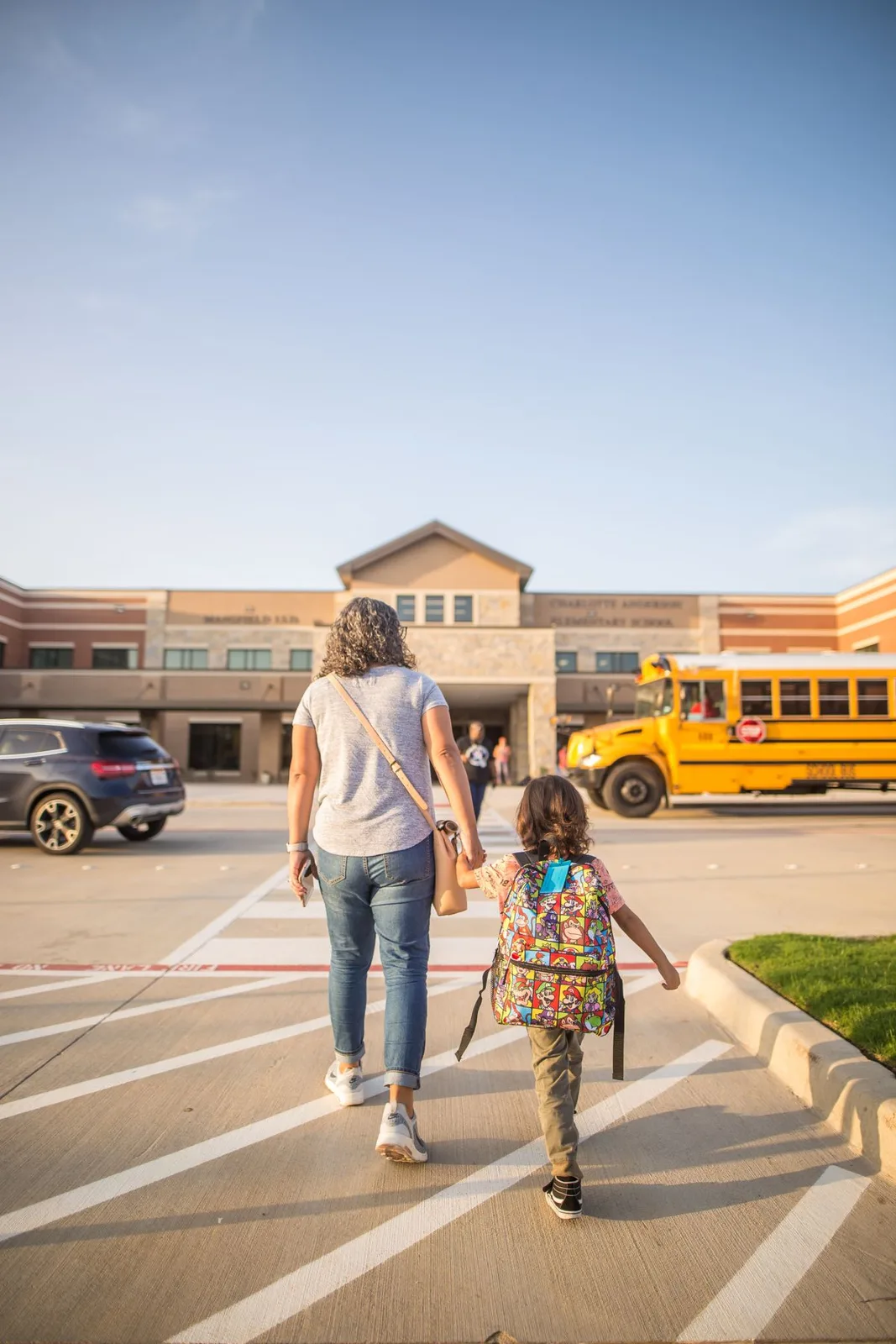
Once you are away from the collection point, explain what happens next: walking home, collecting a sibling or going straight to a club. Mention a change from the usual plan early enough that it is not a surprise at the next turning.
Keep instructions concrete. “We will walk to the gate, then stop to put your coat on” is easier to follow than repeated calls to hurry. Use the route and support appropriate to the child, including road-crossing arrangements.
A child may want to carry their own bag or may need help after a demanding day. Agree what is manageable without making the handover a test of independence. With siblings, explain the order of stops so everyone knows whose collection or activity comes next.
Separate necessary questions from curiosity
Ask about an immediate need when required, but leave general questions about lessons for a calmer moment. Some children want to talk on the journey; others prefer quiet. You can offer attention without requesting a full report.
If a child shares something important, listen and clarify enough to understand the next action. Avoid promising an outcome before checking the situation with the relevant adult. Write down what needs following up rather than holding the entire afternoon in memory.
At home, use a short arrival sequence for bags, shoes and any item that needs adult attention. Papers can go to their usual folder; they do not all need reading at the door.
Close the handover clearly
Make sure the responsible adult knows the child has arrived and understands any immediate changes, using the arrangements agreed in your household. Do not rely on a child to relay adult responsibilities accurately.
Review recurring friction at an unhurried time. A different meeting point permitted by school, a clearer message or fewer arrival demands may help. The aim is a transition that carries the necessary information while leaving space for the child to come home.
Make it work for your family. Keep the useful bits and change the rest.