A picnic becomes awkward when the food is easy to eat but the luggage is hard to carry. Plan the carrying and clearing away at the same time as the menu. Familiar foods in well-chosen containers are usually more practical than a spread requiring plates, serving bowls and several trips from the car.
Choose food suited to the children eating it, including their usual age-appropriate preparation and any allergies. Check whether your chosen place permits picnics.
Start with the walk from your transport
Imagine the actual route with every bag in your hands. Steps, gates or a long walk can make a large hamper impractical. Choose a compact bag or backpack that adults can carry comfortably alongside the other things the family needs.
A child can carry something light and non-essential if they want to, but plan for an adult to take it if they tire. Reaching lunch should not depend on a young child keeping hold of the only food bag.
Choose food that needs little assembly
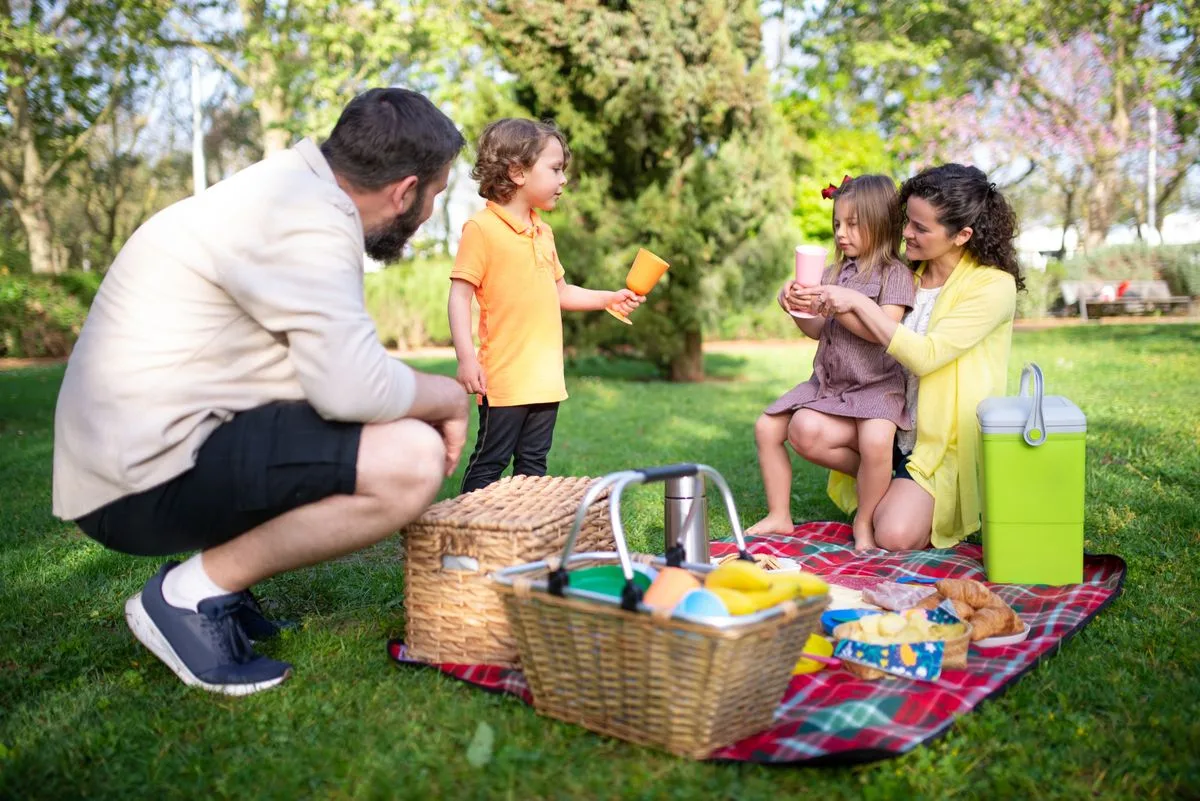
Pack familiar portions and avoid a meal that requires spreading several ingredients on a windy blanket. Reusable containers with simple lids can double as serving dishes. Bring the utensils the chosen food needs, rather than a complete set for every possibility.
Put drinks where you can reach them without opening all the food. Choose drinking containers the children can use with appropriate help. Keep dietary requirements clear when different portions look similar.
Keep chilled food properly cool
Foods normally stored in a fridge need cooling during transport and the picnic. Use a cool bag or box with appropriate ice packs, keep it closed as much as possible and choose a shaded place for it. The Food Standards Agency's outdoor food guidance explains the importance of keeping food cold until it is needed.
Prepare and store food according to its instructions. If you cannot maintain suitable conditions, choose an alternative that can safely travel without refrigeration rather than hoping a cold morning will be enough. An adult should decide what leftovers can be kept.
Pack the return journey before you eat
Bring a bag for rubbish and another suitable container for dirty utensils or leaking leftovers. Keep those separate from items still being used. Cleaning supplies can help with spills, while access to proper handwashing remains useful.
Put lids together in one place as containers are opened. This avoids the final search under the blanket while children are ready to leave.
Clear one area at a time
Close the food, gather utensils, then check the ground for small pieces and packaging. Take rubbish home if suitable bins are unavailable or full. Follow local recycling arrangements rather than putting mixed waste into the nearest labelled bin.
At home, unpack the food bag before it becomes tomorrow's mystery. Wash containers and return the clean picnic essentials to one place. A good packing routine ends when the bag is ready to be useful again.
Make it work for your family. Keep the useful bits and change the rest.