A travel activity wallet is useful when it can be opened in a cramped seat and closed before the next stop. It does not need many activities. A notebook, a few drawing tools and two or three ideas can offer more flexibility than a thick stack of worksheets.
Use a pouch or folding case already available at home. Choose materials suitable for the child's age and the particular journey, with adult supervision as needed.
Test the size on a lap
Put the closed wallet inside the bag you intend to carry. If it crowds out essential items, reduce it. Then open it on a lap or small table and check whether things remain contained.
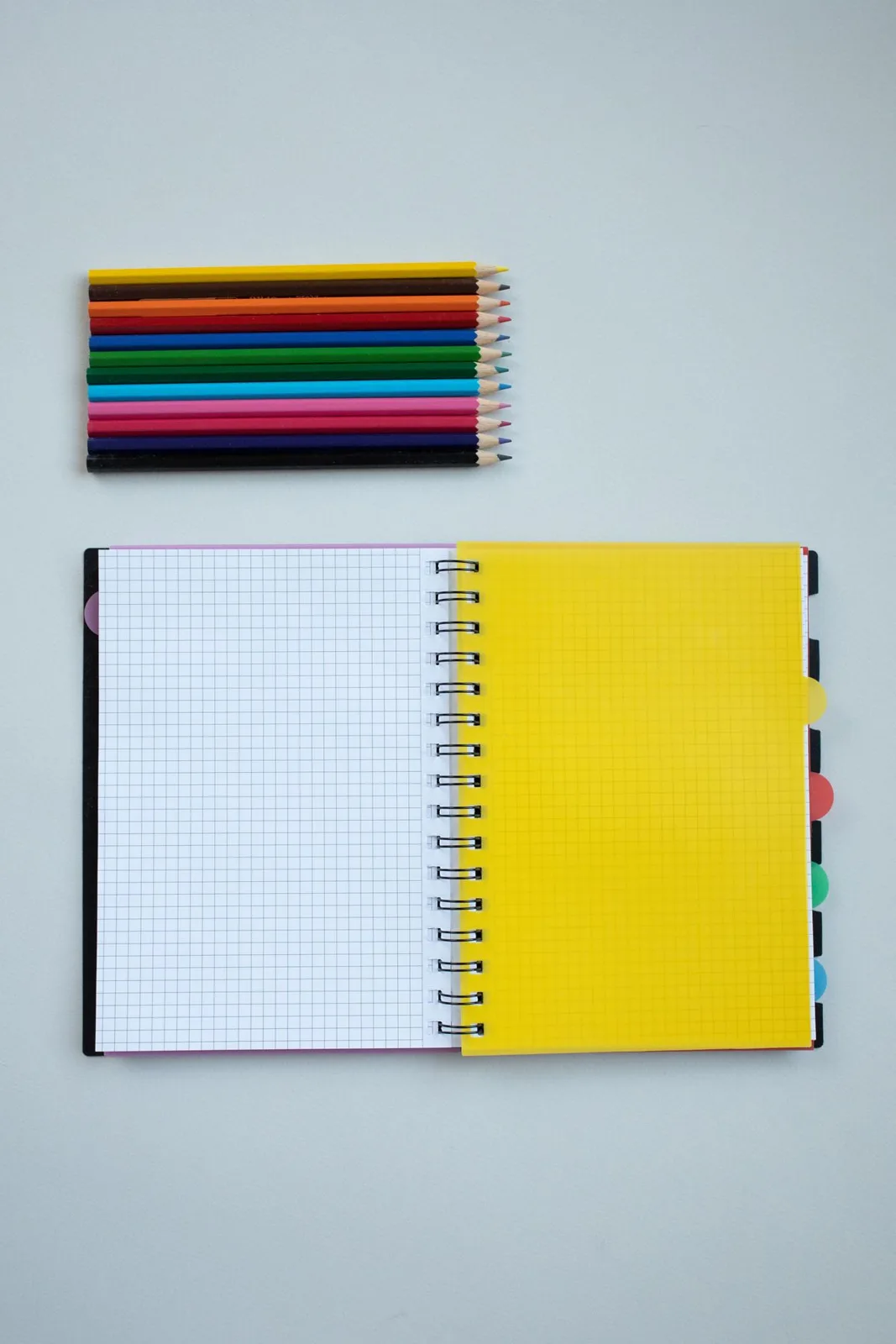
A bound notebook avoids loose pages sliding into the aisle. A short set of crayons or pencils in a secure case is easier to manage than a full pencil tin. Avoid tiny pieces, sharp tools and materials likely to spill.
For a younger child, large pages and chunky drawing tools may be more useful than a compact pad with tiny spaces. An older child might prefer a plain notebook that can hold drawings, lists and invented maps.
Choose prompts with no required ending
Write a few suggestions on the inside cover. “Design a vehicle for a very small animal” can last five minutes or half an hour. “Draw the view as three big shapes” can stop whenever the scenery changes.
Add a spoken option for moments when the notebook is inconvenient. Take turns inventing names for imaginary stations, or tell a story where each person adds one object. Keep the game considerate of other travellers.
For mixed ages, vary the same prompt. A younger child can draw a creature while an older one designs its house and writes labels. Neither has to complete the other's version.
Do not make observation games depend on seeing a particular animal or landmark. A prompt such as “something striped” leaves more possibilities than a checklist of sights the route may not contain.
Build in a fast pause
Practise putting everything away before leaving home. The notebook closes on the current page, drawing tools return to the case and the wallet goes into its own bag compartment.
Explain that activities stop for boarding, getting off and any instruction from the responsible adult or travel staff. Adults should manage the bag during busy transitions rather than expecting children to juggle materials and luggage.
Keep one drawing tool available only when the activity is actually in use. Leaving it loose on a seat invites a search just as the family needs to move.
Refresh only what has been used
After the trip, remove scraps, check the case and replace any missing essential. Keep drawings the child wants before clearing space for another journey.
Ask what was comfortable to use. If a notebook stayed shut because the seat was too cramped, add a spoken game rather than more pages. The wallet earns its place by being portable and easy to reset, not by containing a separate activity for every minute away from home.
Make it work for your family. Keep the useful bits and change the rest.