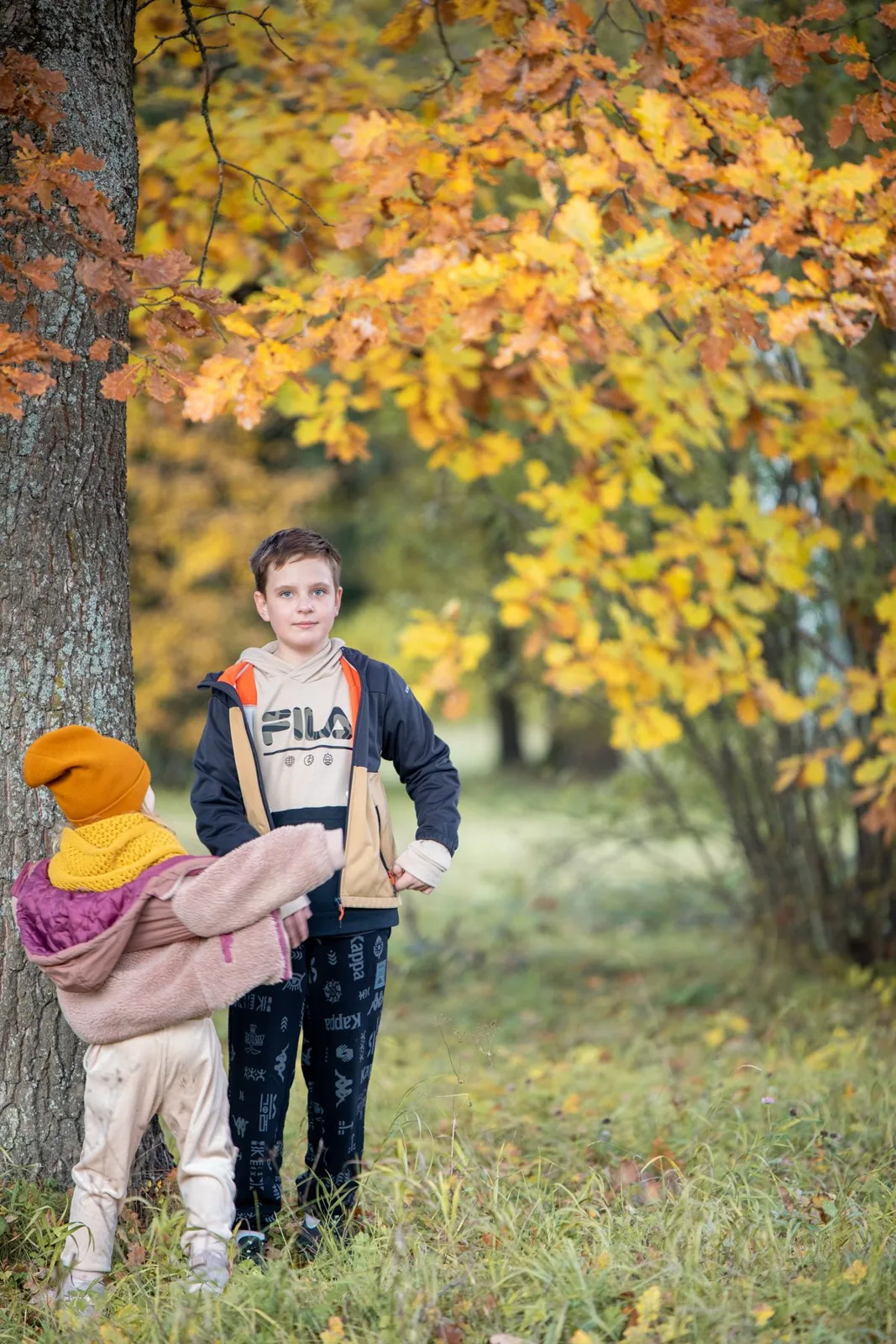
An autumn walk can end with full pockets and a bag of damp leaves that nobody wants to sort. A collecting-free challenge keeps the discoveries outdoors while still giving children something to do. Look closely, describe a detail or make a quick drawing instead of carrying it home.
Choose a familiar permitted route with surfaces suitable for the current weather. Fallen leaves can conceal uneven ground, so keep the challenge secondary to watching where the group is walking.
Look for differences in one small area
At a suitable stopping place, compare the colours visible from the path. Ask whether every leaf on one tree looks the same or whether the upper branches differ from the lower ones. Younger children can point to a favourite patch of colour.
Older children might describe several shades without using the usual colour names: mustard, brick or the inside of an orange. There is no single right vocabulary; the point is to notice distinctions.
If leaves have already fallen, compare the shapes you can see on the ground without gathering them. Do not move into restricted planting or off permitted routes to find a more impressive example.
Try a spoken texture collection
Instead of collecting objects, collect words. From a safe position, choose three things that look different: smooth bark, curled edges or a spiky outline. Describe what is visible rather than assuming it is suitable to touch.
A younger child may enjoy copying a shape with their hands. An older one could invent a short phrase or remember an especially useful word. Let children disagree about whether a shape looks like a fan or a tiny boat.
Leave fungi, berries and unfamiliar plants alone, and do not taste anything. Avoid dismantling piles of leaves or fallen wood, which can shelter wildlife. Follow the land manager's local instructions.
Make a memory drawing at a pause
If the family enjoys drawing, carry one small notebook and a few suitable pencils. Stop somewhere that does not obstruct the path and let each child draw one thing. The page need not be an accurate field guide.
No notebook is required. Children can describe what they would draw and choose which detail matters most. An adult can write their words down later if they want a record.
Keep this pause short enough for the group. One child can finish while another simply looks at the same scene; shared time does not require matching work.
Take the challenge home as an idea
On the return, see whether a familiar view looks different from the other direction. Ask which detail each person can remember without checking a photograph. Do not turn remembering into a competition.
At home, draw the chosen colours, tell someone about the strangest shape or leave the discoveries as a conversation. There is no bag to empty and nothing needs drying. Returning to the route another week can reveal what changed, while the leaves and seeds remain part of the place where you found them.
Make it work for your family. Keep the useful bits and change the rest.